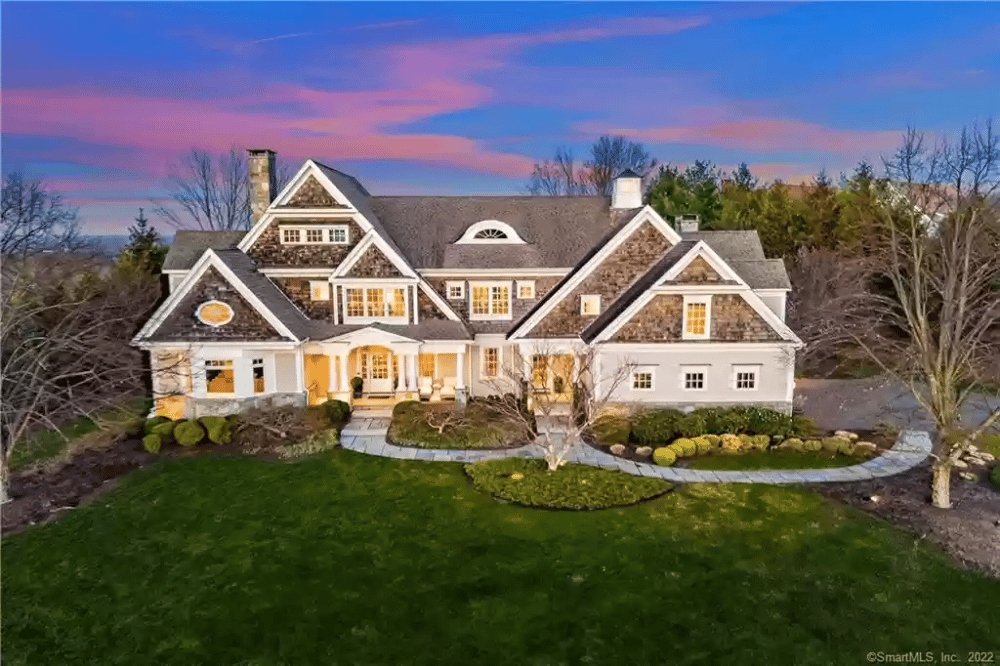
What Should Luxury Buyers Know About Property Taxes?
Adam Cannon September 29, 2026
Adam Cannon September 29, 2026
When you're comparing luxury homes in Connecticut, it's easy to concentrate on the purchase price.
But two homes with similar asking prices can have very different annual property tax bills, and that difference becomes part of the long-term cost of ownership.
For luxury buyers especially, understanding how Connecticut property taxes work can help you compare properties more accurately before making a decision.
Property taxes in Connecticut are administered at the municipal level, not through one statewide property tax rate.
Real estate is generally assessed at 70% of fair market value, and the municipality applies its mill rate to the assessed value to calculate the property tax.
Because mill rates and property values differ between municipalities, similarly priced homes in two Connecticut towns can carry substantially different tax bills.
No.
If a property has an assessed value of $700,000, that doesn't mean the town believes the home is worth only $700,000 on the open market.
Connecticut uses a 70% assessment ratio. In simplified terms, a property valued at $1 million for assessment purposes would generally have a $700,000 assessed value before the applicable mill rate is applied.
Understanding the distinction between market value, assessed value, and taxes owed makes property records much easier to interpret.
Not simply because you bought the home.
Connecticut law prohibits changing a property's assessed value solely on the basis of its sale price.
That's an important distinction for buyers who see a home purchased for significantly more than its current assessed value and assume the assessment will immediately jump to match the sale.
However, assessments can change for other reasons, including municipal revaluation and qualifying property improvements.
Connecticut municipalities generally implement property revaluations every five years according to the state's schedule. The purpose is to bring valuations up to date and distribute the local tax burden more equitably.
A new assessment doesn't necessarily tell you exactly how much the tax bill will rise or fall.
That's because the municipality's mill rate also matters.
If you're considering a luxury home in a town approaching revaluation, it's worth understanding where that municipality is in its cycle rather than assuming the current tax bill will remain unchanged indefinitely.
Luxury buyers should pay particular attention to this when considering extensively renovated homes or planning substantial work after closing.
An addition, major renovation, pool, finished space, or other improvement may affect the property's assessed value depending on the work involved and local assessment practices.
Before undertaking a major project, buyers can speak directly with the local assessor about how the proposed improvements may be treated.
This matters when you're budgeting for a renovation because the construction cost isn't necessarily the only long-term financial consideration.
Suppose you're deciding between two homes at roughly the same purchase price.
One may offer more land, another may have a lower annual tax bill, and another may have recently undergone a municipal revaluation.
Don't evaluate those numbers in isolation.
Consider the purchase price alongside property taxes, insurance, utilities, maintenance, HOA fees when applicable, and the costs associated with the property's amenities and systems.
The better comparison is total cost of ownership.
Connecticut property owners who believe they're aggrieved by an assessor's determination may have the ability to appeal to their municipality's Board of Assessment Appeals under state law.
That doesn't mean an assessment will be reduced simply because the owner believes the taxes are high.
An appeal concerns the assessment itself, and procedures and deadlines matter. Buyers or owners with questions about a particular property should consult the local assessor and appropriate professionals.
As property values rise, even relatively small differences in effective ownership costs can become meaningful over time.
A buyer choosing between two high-end Connecticut properties shouldn't assume the homes are financially comparable simply because their asking prices are similar.
Taxes are part of the equation alongside condition, location, land, amenities, insurance, maintenance, and future capital expenses.
Luxury buying isn't only about determining whether you can afford the purchase price. It's about understanding what the property will cost to own comfortably for years after closing.
Before purchasing a luxury home in Connecticut, review the actual tax history, current assessment, local mill rate, revaluation timing, and any major improvements to the property.
The asking price tells you what it may cost to acquire the home. The carrying costs tell you much more about what it will cost to own it.
Adam Cannon, Realtor
Coldwell Banker Realty | West Hartford
Stay up to date on the latest real estate trends.





Whether buying, selling, or exploring your options, I am ready to help you achieve your goals. With experience, integrity, and commitment, I’m the partner you can count on for exceptional real estate results.