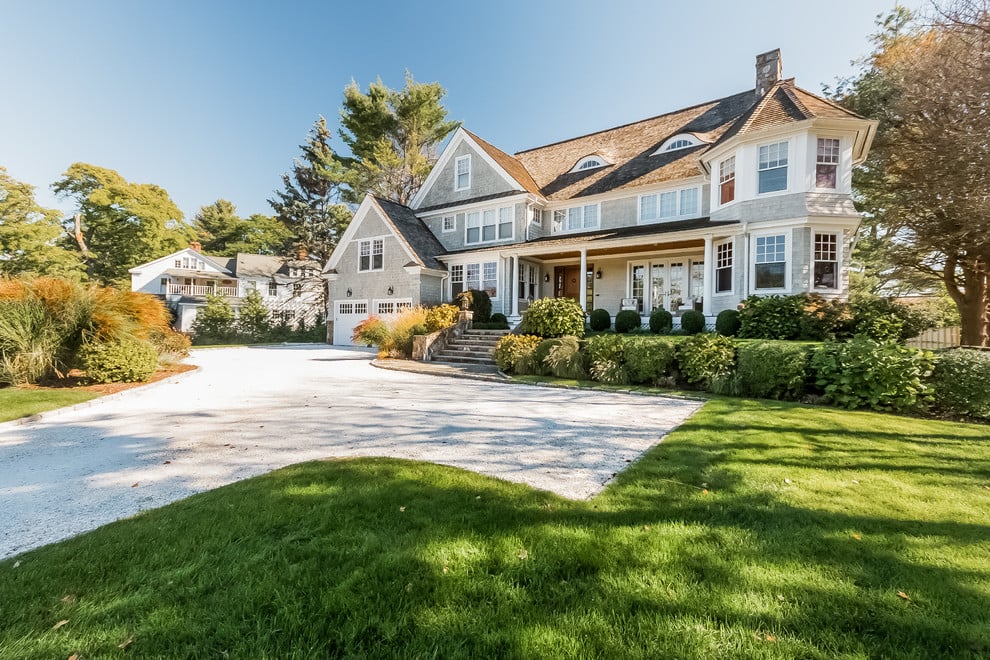
Should I Buy a House at the Top of My Budget?
Adam Cannon September 30, 2026
Adam Cannon September 30, 2026
You get preapproved for a mortgage and finally have a number.
Maybe it's $450,000. Maybe it's $700,000. And naturally, the next question is: Should I actually look at homes that cost that much?
A preapproval can help establish your purchasing power, but your maximum approval isn't necessarily your ideal home-buying budget.
The better question is how much you can comfortably spend while still having room for everything else in your financial life.
Your lender evaluates factors such as income, debts, assets, credit, and the proposed loan to determine what you may qualify to borrow.
That's incredibly important information.
But your lender doesn't determine how much you personally want available each month for savings, retirement, travel, dining out, hobbies, childcare, or other priorities.
You might qualify for a particular payment and still decide you'd be happier spending less.
Don't compare homes using the mortgage principal and interest alone.
Your actual housing expense may also include property taxes, homeowners insurance, mortgage insurance when applicable, and HOA or condominium fees.
This is particularly important in Connecticut because property taxes can make a meaningful difference between properties.
A $550,000 home in one location isn't necessarily going to have the same monthly carrying cost as another $550,000 home elsewhere.
Before increasing your price range, ask your lender to estimate the actual monthly payment for properties you're seriously considering.
Your expenses don't stop with the mortgage payment.
Homes require maintenance. Appliances fail. Heating and cooling systems eventually need service or replacement. Roofs don't last forever.
Then there are utilities, landscaping, snow removal, pest control, and all the smaller expenses that are easy to overlook while house hunting.
A larger or more complex property can also cost more to maintain even when the purchase price comfortably fits your approval.
Leave enough room in your budget to actually own the house, not simply buy it.
This is one of the most important questions to ask.
A buyer might technically be able to afford a higher purchase price by increasing the down payment or using more savings.
But if doing so leaves very little cash afterward, the more expensive home may feel much less comfortable once something needs repair.
Consider your emergency savings and other financial goals alongside your down payment and closing costs.
Getting the keys shouldn't require emptying every account you have.
Today's payment isn't necessarily your payment forever.
With a fixed-rate mortgage, your principal and interest payment may remain stable, but other ownership expenses can change.
Property taxes can increase. Homeowners insurance premiums can change. HOA fees may rise. Utilities and maintenance costs fluctuate.
A budget with some breathing room makes those changes easier to absorb.
Spending near the top of your range isn't automatically a bad decision.
Sometimes the additional money buys something meaningful.
Maybe the more expensive home is in the location you truly want. Maybe it has enough bedrooms to accommodate your foreseeable needs. Perhaps its condition means fewer immediate renovations, or its layout could prevent you from needing to move again relatively soon.
Spending $50,000 more on the right property could potentially make more sense than buying something cheaper that you already expect to outgrow.
The question is whether you're paying more for meaningful long-term value or simply because you've fallen in love with features you don't actually need.
It's easy to become comfortable with increasingly large numbers while house hunting.
A $25,000 price difference can start feeling small when you're comparing $500,000 homes.
But every increase can affect your down payment, monthly payment, cash reserves, and future flexibility.
Think about what you want your life to look like after closing.
If buying the more expensive house means constantly worrying about money, delaying other important goals, or having no cushion for unexpected expenses, the extra space or nicer kitchen may not feel as exciting six months later.
Not necessarily.
Some buyers have stable income, strong reserves, limited debt, and plenty of room in their monthly budget. Buying near their maximum approval may be perfectly manageable.
Others may technically qualify for the same percentage of their income but have expensive hobbies, childcare costs, future career changes, travel plans, or aggressive savings goals.
Affordability is personal.
That's why a lender's maximum and your personal maximum can be two very different numbers.
This may be the easiest way to avoid stretching unintentionally.
Determine what monthly housing expense feels comfortable before you start falling in love with properties.
Then work backward with your lender to understand approximately what purchase price corresponds with that payment, keeping in mind that taxes, insurance, interest rates, and HOA fees can change the calculation from one property to another.
You can always reevaluate for an exceptional home.
But starting with a comfortable target gives you a much better reference point than simply shopping up to whatever amount appears on your preapproval.
You can, if the total cost of ownership genuinely fits your finances.
But don't spend more simply because a lender says you qualify for it.
Look at your monthly payment, property taxes, insurance, cash remaining after closing, expected maintenance, other financial goals, and how long the home is likely to work for you.
The goal isn't necessarily to buy the most expensive house you can afford.
It's to buy the right Connecticut home at a price that still allows you to feel financially comfortable after the excitement of closing day is over.
Adam Cannon, Realtor
Coldwell Banker Realty | West Hartford
Stay up to date on the latest real estate trends.
Whether buying, selling, or exploring your options, I am ready to help you achieve your goals. With experience, integrity, and commitment, I’m the partner you can count on for exceptional real estate results.