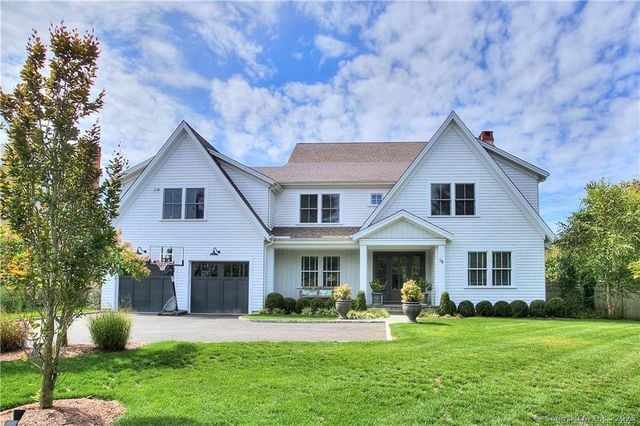
Should You Buy a Newer or Older Home in East Windsor?
Adam Cannon September 22, 2026
Adam Cannon September 22, 2026
You're looking at two East Windsor homes.
One is newer, with modern finishes, updated systems, and very little you expect to change immediately.
The other is decades older but gives you more land, mature trees, a location you like, or simply more house for your budget.
Which one is the better buy?
Age alone won't answer that question.
When you're comparing newer and older homes in East Windsor, you need to look at what comes with each property and what you'll likely spend after closing.
For many buyers, predictability is the biggest advantage.
A newer home may have a roof, windows, heating and cooling equipment, electrical system, plumbing, and appliances that are much earlier in their useful lives.
Modern construction may also offer better insulation and energy efficiency than a home that hasn't been substantially updated in decades.
Then there's layout.
Newer homes are often designed around current preferences, with more open living areas, larger kitchens, primary suites, additional bathrooms, and storage incorporated into the original design.
If those features are already high on your wish list, buying them from the beginning may be easier than trying to create them later.
This is where buyers need to look beyond the year built.
An older home that's been consistently maintained and thoughtfully updated can be in better condition than a much newer property that hasn't received the same care.
Ask what has already been replaced.
How old is the roof?
When was the heating system installed?
Have the windows been updated?
What electrical work has been completed?
Have there been plumbing improvements?
Was insulation added?
A 1960s or 1970s home with significant recent improvements may present a very different ownership picture from another property of the same age with mostly original systems.
Don't forget the land.
An established East Windsor property may offer mature landscaping, larger trees, existing outdoor improvements, or a lot configuration that's difficult to find with some newer construction.
For certain buyers, that matters as much as the interior.
Would you rather have a brand new kitchen or more usable yard?
A newer HVAC system or the setting you really want?
Modern finishes or an established neighborhood?
Those aren't questions with universal answers.
They're tradeoffs.
This is particularly important when you're comparing homes in different parts of East Windsor.
Some properties may rely on private wells or septic systems. East Windsor's permitting guidance specifically notes that properties with well or septic systems require health district approval for certain residential improvements.
If you're considering one of these homes, understand the systems before you buy.
Where is the septic system located?
What is known about its age and maintenance?
Where is the well?
Has the water been tested?
Would the placement of those systems affect future plans for an addition, pool, garage, or other improvement?
A large yard may look like endless possibility until you understand what's underneath it.
Buying newer can reduce the likelihood of certain immediate replacements, but don't confuse newer with free of future costs.
Maybe the yard still needs landscaping.
Maybe you want a patio, deck, fence, shed, or finished basement.
Maybe the home has basic builder finishes you'd eventually replace.
Those projects may be optional, but they're still worth considering when you're comparing the total cost of two properties.
The same applies to new construction.
The advertised home price and the amount you ultimately spend getting the property exactly where you want it may be very different numbers.
An older home may initially look like the less expensive option.
Then you start adding projects.
Kitchen.
Bathrooms.
Flooring.
Windows.
HVAC.
Electrical work.
Suddenly the price difference between the older property and newer alternative doesn't look nearly as large.
Before choosing the less expensive house because you can "update it later," make a realistic list of what you'd actually change.
Separate the things you need to address from the things you simply want.
Then attach rough budgets and timelines to the larger projects.
You may still decide the older home is the better opportunity. You'll just be making that decision with a clearer picture of what it could cost.
Paint is easy to change.
A dated bathroom can eventually be renovated.
Flooring can be replaced.
The lot, street, and general location are much harder to change.
That's why I wouldn't automatically choose the newer house simply because it photographs better.
If the older property gives you the setting, land, layout potential, or location you strongly prefer, cosmetic work may be a reasonable tradeoff.
On the other hand, if you don't want projects consuming your weekends or savings after closing, paying more for a newer or extensively updated home may be worth it.
Instead of comparing only the purchase prices, imagine owning each home for the next five years.
What are you likely to replace?
What will you want to renovate?
What maintenance comes with the property?
What improvements are already finished?
How much outdoor upkeep will you have?
Are there major systems approaching the end of their expected useful lives?
This exercise won't predict every expense.
It can, however, prevent you from treating a lower purchase price as automatically cheaper.
East Windsor is currently developing its 2026 Plan of Conservation and Development, which looks at the town's long term approach to housing, transportation, infrastructure, natural resources, economic development, and future land use.
That makes it especially important to evaluate the specific part of town you're buying in rather than treating every East Windsor property as interchangeable.
Location, surrounding land uses, utilities, property characteristics, and future plans can all be relevant when you're making a long term purchase.
The newer home may make more sense if you value updated systems, modern layouts, efficiency, and fewer immediate projects.
The older home may make more sense if it gives you more property, a location you prefer, established surroundings, or features that would be difficult to reproduce.
Don't buy based on the year built.
Buy based on condition, location, land, systems, future expenses, and how well the property fits your plans.
If you're looking at homes in East Windsor or elsewhere in Hartford County, I can help you compare recent sales and look beyond the listing photos to understand what you're actually getting for your budget.
Adam Cannon, Realtor
Coldwell Banker Realty | West Hartford
Stay up to date on the latest real estate trends.
Whether buying, selling, or exploring your options, I am ready to help you achieve your goals. With experience, integrity, and commitment, I’m the partner you can count on for exceptional real estate results.