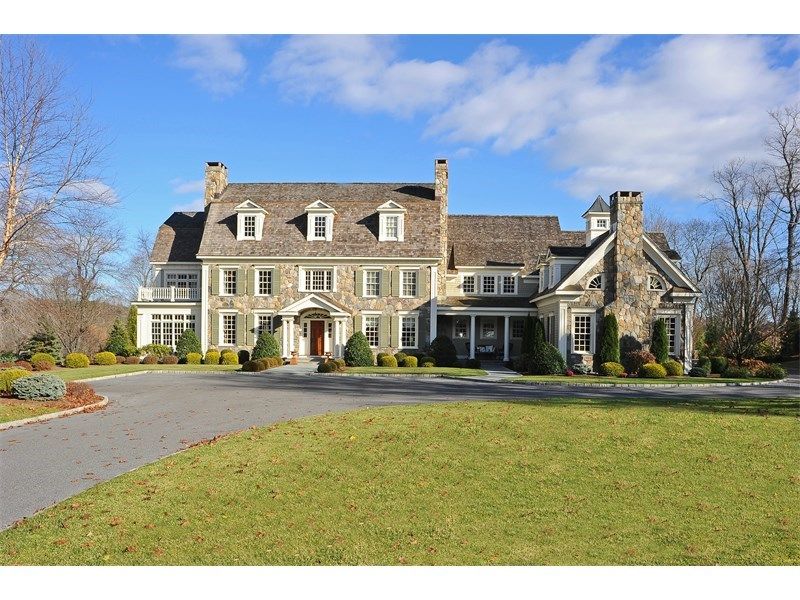
Why Are Homes in Fairfield, Connecticut So Expensive?
Adam Cannon October 6, 2026
If you've started searching for homes in Fairfield, you may have experienced a little sticker shock.
A home that seems fairly ordinary on paper can carry a price tag that feels surprisingly high. Larger, renovated, coastal, or particularly well-located properties can climb significantly higher.
So, why is Fairfield real estate so expensive?
There isn't one reason. Home prices reflect a combination of location, demand, limited housing supply, commuting access, lifestyle, individual neighborhoods, and the characteristics of the property itself.
Understanding those factors can also help buyers determine whether a particular Fairfield home is actually worth its asking price.
Recent single-family market data showed a median sold price around $1.2 million in Fairfield, with homes selling for approximately 104% of asking price on average.
That doesn't mean you need $1.2 million to buy every house in town, nor does it mean every listing will sell above asking.
Fairfield has a wide range of housing, and pricing can change substantially depending on location, size, condition, lot, and property type.
But the broader numbers illustrate an important point: buyer demand remains strong enough to support a significant premium in many parts of town.
When you buy a home in Fairfield, you're not only buying the structure.
You're buying its location within Fairfield County and southwestern Connecticut.
For buyers who need access to New York City, Metro-North service is an important part of the equation. Fairfield has multiple train stations, giving commuters options that many Connecticut communities simply don't offer.
That accessibility can increase the number of buyers interested in living here, particularly among people relocating from New York City or Westchester County.
More potential buyers competing for a limited supply of homes can support higher prices.
If commuting were the only reason people wanted to live in Fairfield, pricing would be much easier to explain.
But the town also offers a combination of amenities that attracts buyers who aren't commuting to New York every day.
There's a downtown with restaurants and shops, access to Long Island Sound, beaches, parks, recreation, universities, and residential neighborhoods that can feel very different from one another.
That variety gives Fairfield broad appeal.
Some buyers want to be close to downtown and the train. Others prioritize more land, a quieter setting, coastal access, or a particular neighborhood feel.
All of that demand is competing within one town.
Real estate prices are heavily influenced by supply and demand.
Fairfield can't simply create an unlimited number of new single-family homes every time buyer demand increases.
Established neighborhoods, existing development, land availability, zoning, and geography all limit how much housing supply can expand.
When fewer desirable homes are available than there are buyers who want them, competition can push prices higher.
That's particularly noticeable when a well-maintained or renovated home in a strong location hits the market at an attractive price.
An above-asking sale doesn't necessarily mean the buyer "overpaid."
Sometimes a home is intentionally listed at a price designed to generate significant interest.
If multiple buyers believe the property is worth more than the asking price, competition can push the final sale price higher.
That's why buyers shouldn't automatically use list price as their definition of value.
Recent comparable sales, condition, location, competing inventory, and the amount of buyer interest in the individual property provide much more useful context.
This is where Fairfield real estate becomes especially location-specific.
Two homes with similar square footage and bedroom counts can have very different values.
One may be within easy reach of a train station or downtown. Another might offer more privacy or a larger lot. One could be extensively renovated while the other needs substantial updates.
Proximity to the coast, traffic patterns, lot quality, condition, age, renovations, neighborhood setting, and even the specific street can influence what buyers are willing to pay.
That's why price per square foot alone rarely tells the whole story.
It can.
Fairfield's location along Long Island Sound creates housing opportunities that aren't available in inland Connecticut communities.
For some buyers, proximity to the water, beach access, views, or a coastal lifestyle commands a meaningful premium.
But coastal property also requires additional due diligence.
Flood exposure, insurance, drainage, storm risk, and property-specific maintenance should all be considered alongside the benefits of the location.
A higher price doesn't automatically make one coastal home better than another.
Usually, both.
This is one of the most important concepts for buyers moving into a more expensive housing market.
A $900,000 home in Fairfield may not physically look like what you imagined a $900,000 house would look like somewhere else in Connecticut.
Part of that price reflects the land and location.
If you're comparing Fairfield with communities where the same budget buys substantially more square footage, ask yourself what you value more.
Would you rather have a larger home elsewhere, or a smaller home with the location and lifestyle Fairfield provides?
Neither answer is wrong.
That depends entirely on what you're looking for.
If Metro-North access, proximity to New York, beaches, downtown amenities, and the overall location are important to you, paying more for less square footage may be a tradeoff you're comfortable making.
If your priorities are acreage, maximum square footage, or stretching your budget as far as possible, another Connecticut market may offer more of what you value.
The mistake is assuming that because Fairfield is desirable, every Fairfield listing is automatically worth its asking price.
Look at the individual property, not simply the town's reputation.
Review recent comparable sales. Consider the neighborhood and specific street. Evaluate condition, renovations, lot, layout, taxes, location, and current competing homes.
Also look at how long the property has been listed and whether similar homes are selling quickly.
Fairfield may be an expensive housing market, but buyers should still evaluate value carefully.
Fairfield home prices reflect something real: a combination of location, transportation, amenities, coastal access, limited housing supply, and sustained buyer demand.
But buying here still comes down to the individual home.
The goal isn't to decide whether Fairfield as a whole is "worth it."
It's to determine whether a specific property gives you enough of what you value to justify what you're paying for it.
For buyers searching Fairfield County real estate, relocating from New York to Connecticut, or considering a move within the state, understanding why Fairfield commands a premium makes it much easier to evaluate whether that premium makes sense for you.
Adam Cannon, Realtor
Coldwell Banker Realty | West Hartford
Stay up to date on the latest real estate trends.
Whether buying, selling, or exploring your options, I am ready to help you achieve your goals. With experience, integrity, and commitment, I’m the partner you can count on for exceptional real estate results.