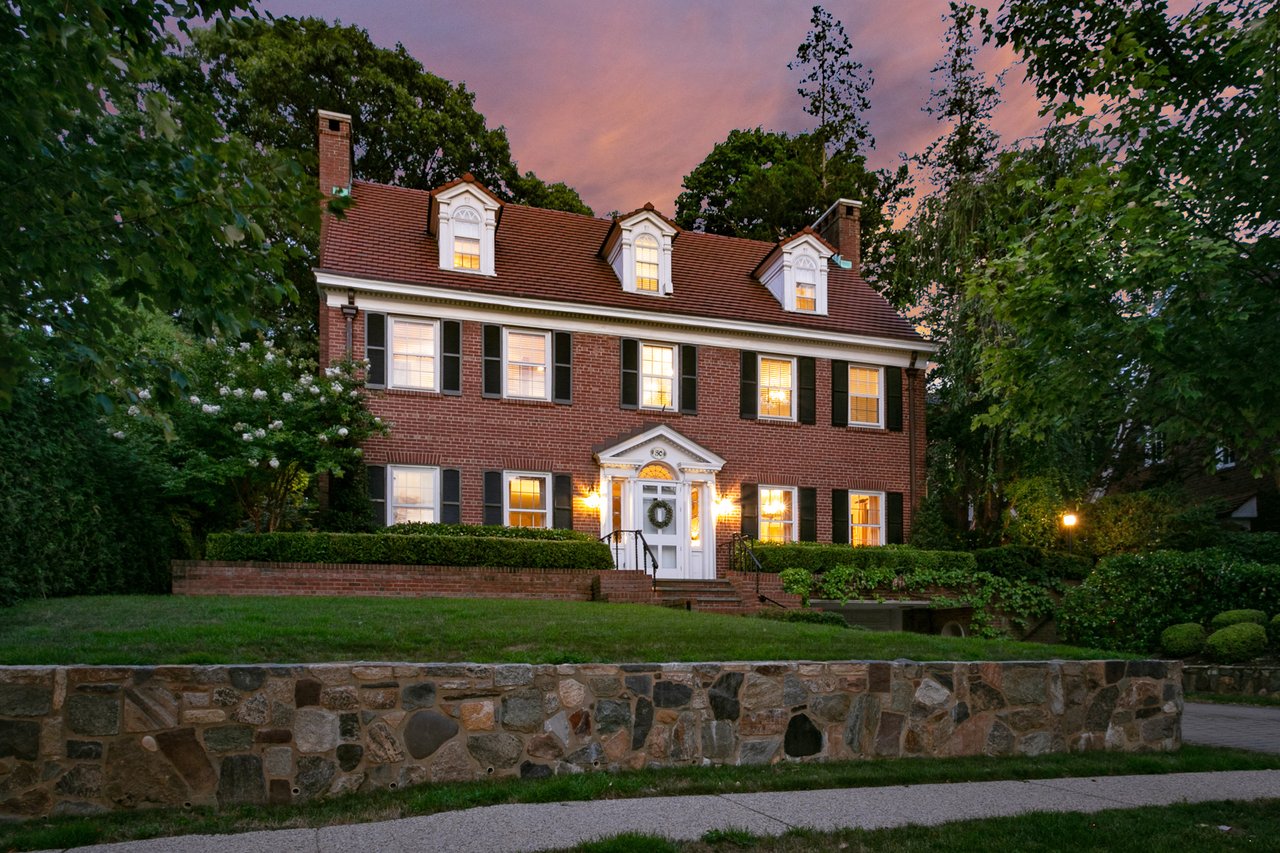
What Is Your Farmington Valley Home Worth?
Adam Cannon August 28, 2026
Adam Cannon August 28, 2026
If someone asked what your Farmington Valley home is worth today, how would you answer?
You might start with what you paid for it.
Maybe you've been watching the estimated value on a real estate website.
You could look at your latest property assessment or think about what the house down the street sold for.
All of those numbers can provide useful information, but none of them independently determines what your home could actually sell for.
For homeowners in Avon, Simsbury, Farmington, Canton, and Granby, property values can vary considerably based on factors that aren't always obvious from an online estimate or town record.
If you're considering selling your home, understanding those differences matters. Your property's current market value should be based on what today's buyers are likely to pay for your specific home, not simply a generalized estimate.
There isn't one formula that can accurately value every Farmington Valley property.
Square footage, bedrooms, bathrooms, and lot size certainly matter, but they're only the beginning.
Location within the town matters.
Condition matters.
Renovations and maintenance matter.
The age of major systems can matter.
Layout, outdoor space, privacy, architectural style, and the availability of competing homes can all influence buyer perception and ultimately affect selling price.
This becomes particularly important in the Farmington Valley because the housing stock is so varied.
A historic home near a town center shouldn't necessarily be evaluated the same way as a newer Colonial in an established subdivision. A larger Granby property with acreage may attract buyers differently from an Avon condo or a Farmington home located close to major employment centers.
The market isn't simply valuing a number of bedrooms. It's valuing the entire property.
Your original purchase price is an important part of your personal financial history.
It isn't a current market analysis.
If you purchased your home several years ago, the local real estate market, available inventory, buyer demand, and competing sales may all look different today.
You've also been living in the property.
Maybe you've renovated the kitchen, replaced the roof, installed new mechanical systems, finished additional space, improved the landscaping, or simply maintained the home exceptionally well.
Those changes can affect how your property compares with others when you're ready to sell.
On the other hand, a rising market doesn't mean every home has appreciated by exactly the same percentage.
The only way to understand your current position is to look at the market as it exists now.
Automated home value estimates are convenient.
They can also create false confidence.
An algorithm can analyze public records, previous transactions, and nearby sales, but it hasn't necessarily walked through your house.
It doesn't experience the renovated kitchen.
It may not fully understand the difference between your lot and the one behind you.
It doesn't necessarily know that you've replaced major systems, refinished the floors, redesigned the outdoor space, or maintained the home differently from a comparable property.
The reverse can also happen.
An online estimate may assign significant value based on basic property data without understanding condition issues that a buyer would immediately notice during a showing.
Online valuations can be useful starting points.
They shouldn't automatically become your listing price.
Homeowners also sometimes look at their municipal assessment and assume it represents exactly what their property should sell for.
Market value and assessed value shouldn't be treated interchangeably when you're preparing to list.
A municipal assessment exists primarily for property taxation. A real estate pricing strategy is designed around current buyer demand, comparable sales, competition, condition, and the characteristics of the individual property.
If you're trying to determine what you could realistically sell your Farmington Valley home for, current market evidence should carry much more weight than simply looking at the number on your tax record.
This is another easy trap for homeowners.
You see a house nearby sell for $700,000 and immediately start calculating what that means for yours.
Maybe it means a lot.
Maybe it doesn't.
How large was that home?
How many bedrooms and bathrooms did it have?
Was the kitchen renovated?
How old were the roof and mechanical systems?
Did it have a finished basement?
Was the lot larger?
Was the location within the neighborhood better or worse?
Did it back up to something that affected buyer interest?
How many offers did it receive?
A truly useful comparable sale should have meaningful similarities to your property.
Sometimes the best comparison isn't the house physically closest to yours.
Another reason automated valuation can be difficult is that the Farmington Valley isn't one uniform housing market.
Avon, Simsbury, Farmington, Canton, and Granby each offer different combinations of housing styles, lot sizes, neighborhood settings, commercial convenience, recreation, and property types.
Even within an individual town, values can shift depending on the specific area and property.
That's why saying "homes in the Farmington Valley are selling for X" doesn't tell a homeowner enough.
The better question is:
What are homes like mine, in my part of town, selling for right now?
That's where a useful pricing conversation begins.
If you've invested significantly in your home, it's natural to expect those improvements to increase its value.
They often can.
But spending $50,000 on a project doesn't automatically make the property worth exactly $50,000 more.
Some improvements have a stronger effect on marketability than others. Certain projects may help a home compete with renovated inventory, while others are highly personal and may not carry the same value for the eventual buyer.
Maintenance matters too.
A newer roof, updated heating system, replacement windows, or other major improvements may not generate the same emotional response as a remodeled kitchen, but they can affect buyer confidence and how your home compares with competing properties.
When evaluating value, the question isn't simply how much you've spent.
It's how the market is likely to respond to what you've done.
Your home's value doesn't exist in isolation.
Imagine you're preparing to sell and there are very few comparable homes available in your area.
Your property may attract buyers who have been waiting for exactly that type of listing.
Now imagine several similar homes enter the market at the same time.
Buyers suddenly have choices.
That doesn't necessarily change the physical characteristics of your house, but it can change how strategically you should position it.
This is why pricing should be evaluated close to the time you actually plan to sell rather than months in advance and never revisited.
Once homeowners learn their potential value, another temptation appears: listing at the highest number imaginable "just to see what happens."
That strategy can backfire.
The early days of a new listing are valuable because that's when buyers who have already been searching are most likely to notice it.
If the price immediately feels disconnected from comparable homes, buyers may skip the showing entirely.
Then the property sits.
Eventually, the seller may reduce the price to where it should have been initially, but the listing no longer has the same freshness it had on day one.
A strong pricing strategy isn't about choosing a low number or a high number.
It's about choosing a number the current market can support.
You don't have to be listing next week to benefit from understanding your home's value.
If you're considering selling within the next year, knowing your approximate market position can help you make other decisions.
How much equity might you have?
Would selling give you enough proceeds for your next purchase?
Are there improvements worth completing first?
Does moving now make financial sense, or would waiting better fit your plans?
Those questions are much easier to answer when you're working with a realistic estimate of what the property could sell for.
If you own a home in Avon, Simsbury, Farmington, Canton, or Granby, your property has characteristics that an automated estimate may never fully capture.
Determining what it could sell for requires looking at the home itself, recent comparable sales, active competition, current buyer demand, condition, improvements, location, and the specific segment of the Farmington Valley market where your property competes.
You may discover your home's value is close to what you expected.
You may discover the online estimate was overly optimistic.
Or your home may be worth considerably more than the number you've had in your head.
If you're considering selling your Farmington Valley home, I can prepare a comparative market analysis and show you how your property compares with recent sales and current competition before you make any decisions.
Adam Cannon, Realtor
Coldwell Banker Realty | West Hartford
Stay up to date on the latest real estate trends.
Whether buying, selling, or exploring your options, I am ready to help you achieve your goals. With experience, integrity, and commitment, I’m the partner you can count on for exceptional real estate results.