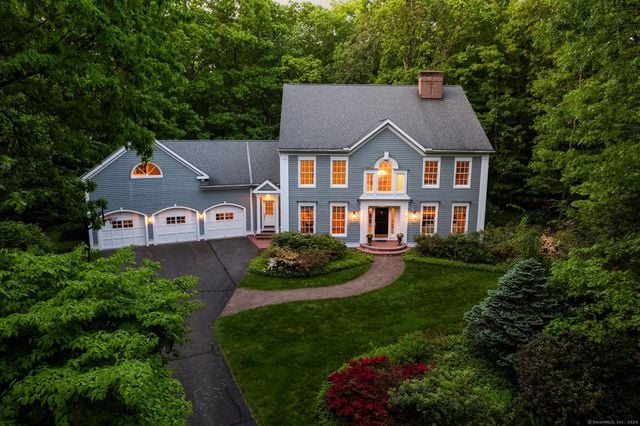
What Happens If My Home Appraisal Comes In Low?
Adam Cannon June 4, 2026
Adam Cannon June 4, 2026
You accepted an offer. Inspections are done. Attorneys are moving. Closing day is on the calendar. Then the call comes: the appraisal came in below your agreed sale price.
For Connecticut sellers, few moments in the transaction feel more unsettling than this one. The questions come fast. Does the deal fall apart? Will the buyer walk? Do you have to drop your price?
The good news is that a low appraisal does not automatically end your transaction. Sellers throughout West Hartford, Hartford County, and Farmington Valley communities including Avon, Simsbury, Farmington, Canton, and Granby navigate appraisal challenges and close successfully every year. What matters is understanding what a low appraisal actually means and knowing what options are available to you.
Why Does the Appraisal Matter in the First Place?
When a buyer is financing their purchase, their lender requires an independent appraisal before approving the loan. The appraiser evaluates the property and provides an opinion of value based on recent comparable sales, property size and condition, location, updates and improvements, and current market conditions.
The lender uses that appraisal to determine how much they are willing to lend. If the appraisal supports the agreed purchase price, the transaction typically continues moving forward without issue. If it comes in lower, you now have what is commonly called an appraisal gap, and that is where the conversation starts.
What Is an Appraisal Gap and Why Does It Create Problems?
An appraisal gap is simply the difference between what the buyer agreed to pay and what the appraiser determined the home is worth.
Here is a straightforward example. If your home is under contract for $550,000 and the appraisal comes back at $525,000, there is a $25,000 gap. The buyer's lender may only be willing to lend based on the appraised value of $525,000, not the contract price of $550,000. That means someone needs to account for that $25,000 difference, or the transaction is at risk.
That is when the real work begins.
Why Do Low Appraisals Happen?
One of the most common reactions sellers have is assuming a low appraisal means they overpriced their home. That is not always the case, and it is important to understand the full picture.
Low appraisals happen for a variety of reasons. In competitive Connecticut markets, buyer demand can move faster than recent comparable sales data can reflect. Appraisers rely heavily on closed sales, which may lag behind where the market actually is at the time of your contract. Limited comparable properties in your neighborhood can also make it harder for an appraiser to accurately capture your home's value. Unique features, significant improvements, or highly upgraded finishes can also be difficult to quantify through standard appraisal methodology.
This is why appraisal issues can occur even in situations where a home received multiple offers at or above asking price. A strong buyer response does not guarantee the appraiser will arrive at the same number.
What Are Your Options as a Connecticut Seller?
This is the most important section for any seller facing a low appraisal, and the answer sellers are searching for is: you have more options than you think.
The first option is the buyer covering the appraisal gap. If the buyer is motivated and has the financial flexibility, they may agree to bring additional cash to closing to cover some or all of the difference between the appraised value and the purchase price. This is increasingly common in competitive markets where buyers are willing to pay above appraised value to secure a home they want.
The second option is renegotiating the purchase price. In some situations, the buyer and seller agree to reduce the contract price to align more closely with the appraised value. This does not always mean meeting exactly at the appraised number. Sometimes both parties split the difference and find a middle ground that works for everyone.
The third option is a combination approach. The buyer covers part of the gap and the seller adjusts the price slightly. Splitting the difference is often the path of least resistance and keeps the deal moving without either side absorbing the full impact.
The fourth option is challenging the appraisal through a reconsideration of value. If there is evidence that the appraiser overlooked relevant comparable sales, made factual errors about the property, or missed recent market data, the lender may allow a formal challenge. This is not always successful, but in cases where the appraisal contains clear errors or missed important information, it is worth pursuing with the support of your real estate agent.
The fifth option is the buyer walking away. If the buyer has a financing contingency and the gap cannot be resolved, the buyer may have the contractual right to exit the transaction. This is the outcome sellers fear most, but it is far from the only possibility and often not what happens.
Does a Low Appraisal Mean the Buyer Will Leave?
Not necessarily, and this is one of the biggest misconceptions sellers carry into appraisal situations.
Many buyers remain fully committed even after a low appraisal. The outcome depends heavily on the size of the gap, the buyer's financial situation, how motivated they are to own that specific home, and the overall negotiating dynamic between both parties.
A small appraisal gap is often resolved quickly with minimal disruption to the transaction. A larger gap requires more deliberate negotiation but still does not automatically mean the deal is over. Buyers who have gone through inspections, attorney review, and weeks of process are often far more invested than sellers assume.
How Connecticut Market Conditions Factor In
Throughout Hartford County and Farmington Valley markets including West Hartford, Avon, Simsbury, Farmington, Canton, and Granby, buyer demand has remained meaningful enough in recent years that purchase prices have occasionally outpaced what appraisers can fully support through available comparable data.
This is a market reality, not a pricing error. When buyer competition is strong and inventory is limited, the price a willing buyer agrees to pay can genuinely exceed what recent closed sales reflect. Appraisers work within a structured methodology that does not always capture rapidly shifting market dynamics in real time.
This is exactly why having an experienced local agent on your side during appraisal negotiations matters. Understanding how to respond, what data to present, and how to guide the conversation can make a meaningful difference in whether the transaction closes or unravels.
What Sellers Should Remember If This Happens to Them
A low appraisal is not a deal killer. It is a complication, and complications in real estate transactions are normal. The sellers who handle appraisal issues most successfully are the ones who stay calm, understand their options, and approach the situation strategically rather than emotionally.
Most appraisal gaps have a path forward. Renegotiation, buyer gap coverage, a combination of both, or a successful reconsideration of value can all keep your closing on track. The key is working through the situation with clear information and a experienced professional in your corner.
If you are preparing to sell in West Hartford, Hartford County, or anywhere throughout the Farmington Valley and want to understand how pricing strategy, appraisals, and negotiations work in today's Connecticut market, reach out today. A conversation now can help you avoid surprises later.
Adam Cannon, Realtor
Coldwell Banker Realty | West Hartford
Stay up to date on the latest real estate trends.









Whether buying, selling, or exploring your options, I am ready to help you achieve your goals. With experience, integrity, and commitment, I’m the partner you can count on for exceptional real estate results.