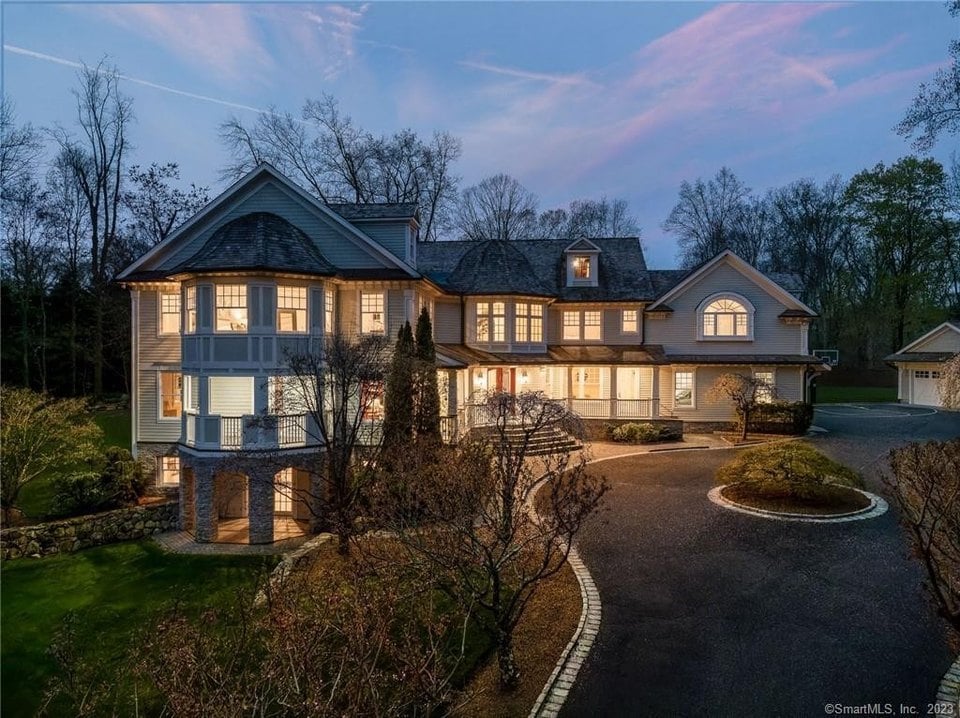
Is It Worth Stretching Your Budget to Buy in the Farmington Valley?
Adam Cannon September 11, 2026
Adam Cannon September 11, 2026
You've been searching for a home in the Farmington Valley for months.
Then you finally find one.
Right location. Right amount of space. Right yard. Maybe even the kitchen you don't immediately want to rip apart.
There's just one problem.
It's more than you planned to spend.
For buyers searching in Avon, Simsbury, Farmington, Canton, or Granby, this can become a very real decision. Do you increase your budget to get the home and location you want, or stick to your original number and keep searching?
There isn't a universal answer.
But there is a much better way to think about it than simply asking whether you can qualify for the larger mortgage.
A $25,000 difference in purchase price sounds very different from a $25,000 check you have to write tomorrow.
That's why buyers should translate the higher purchase price into an estimated monthly cost.
Talk with your lender about what the new price means for your mortgage payment and cash needed at closing.
Then include the rest of the ownership costs.
Property taxes.
Homeowners insurance.
HOA fees, if applicable.
Utilities.
Expected maintenance.
The question isn't whether the lender will approve you for the higher amount.
It's whether the resulting monthly expense still leaves you financially comfortable.
There's a major difference between stretching your planned budget and stretching your finances.
Suppose you're considering a $625,000 home that's more than you originally planned to spend.
The roof is newer.
The heating and cooling systems have been updated.
The kitchen works for you.
The bathrooms don't need immediate renovation.
The property has been well maintained.
Now compare it with a $575,000 home.
That second property may look like the financially conservative choice.
But what if it needs a roof, older mechanical systems, substantial cosmetic work, and a kitchen renovation within the next several years?
The $50,000 difference between the homes doesn't automatically mean you'll be $50,000 better off buying the less expensive one.
Purchase price is only one part of the cost of ownership.
This distinction matters.
Maybe you've found less expensive homes elsewhere in Hartford County.
But you keep coming back to the Farmington Valley.
Why?
If the answer is simply that you've heard it's a desirable area, that's probably not enough reason to push your finances.
But if living there materially affects your everyday life, that's different.
Maybe it improves your commute.
Maybe you're frequently in Farmington or West Hartford.
Maybe family lives nearby.
Maybe you regularly use the trails, recreation, restaurants, medical facilities, or other amenities in the area.
Maybe you simply know this is where you want to remain for the next decade.
Location isn't something you can renovate after closing.
If you buy a less expensive house somewhere you don't actually want to live, the nicer kitchen may not compensate for the location every morning when you leave for work.
Stretching for a property you're likely to outgrow quickly deserves more scrutiny than stretching for a home that could work for many years.
Think beyond your current needs.
Would the layout still work if your household changes?
Is there enough storage?
Does the location still make sense if your routine changes?
Would you need to move again simply to get another bedroom, office, garage, or different type of outdoor space?
Nobody can predict exactly where they'll be ten years from now.
But if you're already identifying reasons the property won't work in three years, paying a premium to get it becomes harder to justify.
When buyers increase their search price, they sometimes focus almost entirely on the mortgage.
Property taxes are part of the monthly equation too.
Connecticut municipalities assess real estate at 70 percent of fair market value and apply the municipality's mill rate to that assessment. Because assessments and mill rates vary, two similarly priced homes can have different tax bills.
Farmington is also undergoing a state mandated revaluation effective October 1, 2026, with new values intended to reflect the market as of that date.
That doesn't mean buyers should choose a town based on the mill rate alone.
It means you should look at the actual tax bill for the property you're considering and incorporate it into your affordability calculation.
Don't compare two homes based solely on list price.
Compare what owning each one actually costs.
This may be the most important question.
If spending another $30,000 on the purchase means a manageable difference in your monthly payment while keeping your emergency savings intact, that's one scenario.
If it means draining the cash you planned to keep after closing, that's another.
Homes cost money after you buy them.
Something will eventually break.
You'll probably want furniture.
You may discover projects after moving in.
There are moving expenses, utility costs, maintenance, landscaping, and all the normal expenses of actually living in the property.
Buying the dream house and then having no financial breathing room isn't much of a dream.
Before increasing your budget, try changing another variable.
Could you buy the same location with one fewer bedroom?
Would you consider an older kitchen?
Could you live with one garage bay instead of two?
Would a smaller lot work?
Could you consider a condo or townhouse?
Would expanding the geographic search slightly introduce better options?
Buyers sometimes increase their price because they're trying to preserve every item on the original wish list.
But one compromise on the house could save considerably more than increasing the budget to avoid compromising at all.
Figure out which features you can change and which ones you can't.
You can renovate dated flooring.
You can't add ten minutes back to your commute every day.
This deserves its own section because buyer fatigue is real.
After losing several offers or watching homes disappear quickly, buyers can start making decisions they wouldn't have made at the beginning of the search.
Suddenly another $40,000 doesn't sound so bad.
The inspection concern seems less important.
The monthly payment becomes something you'll “figure out.”
That's when it's worth returning to the numbers you established before emotions entered the picture.
A competitive market may require flexibility.
It shouldn't require abandoning the financial boundaries that protect you after closing.
There are also situations where rigidly sticking to an arbitrary price ceiling doesn't make sense.
Maybe your original budget was intentionally conservative.
Your lender confirms that the higher payment remains comfortable.
You can make the purchase without exhausting your reserves.
The home needs significantly less work than the cheaper alternatives.
The location solves an important need.
And the property could work for you for many years.
In that situation, spending more may be entirely reasonable.
The goal isn't to buy the cheapest acceptable house.
It's to make the strongest long term decision within your financial limits.
The worst time to decide your true maximum budget is when you're standing in a house you love and offers are due that evening.
Do the work beforehand.
Ask your lender to show you estimated payments at several purchase prices.
Understand how taxes affect those numbers.
Decide how much cash you want remaining after closing.
Build in room for maintenance.
Then determine the point where the payment stops feeling comfortable.
That gives you a real ceiling rather than a number invented in the middle of an emotional offer decision.
That depends entirely on what you're getting in return.
For some buyers, the location, property, commute, space, and long term fit justify increasing the budget.
For others, the higher price would create a monthly payment that limits everything else they want to do.
Neither buyer is wrong.
The important thing is knowing whether you're paying more because the property genuinely improves your long term situation or because you're frustrated and afraid another house won't come along.
If you're considering buying in Avon, Simsbury, Farmington, Canton, or Granby, I can help you compare recent sales, evaluate properties across different price points, and understand what you're actually gaining when you decide whether a home is worth stretching for.
Adam Cannon, Realtor
Coldwell Banker Realty | West Hartford
Stay up to date on the latest real estate trends.
Whether buying, selling, or exploring your options, I am ready to help you achieve your goals. With experience, integrity, and commitment, I’m the partner you can count on for exceptional real estate results.