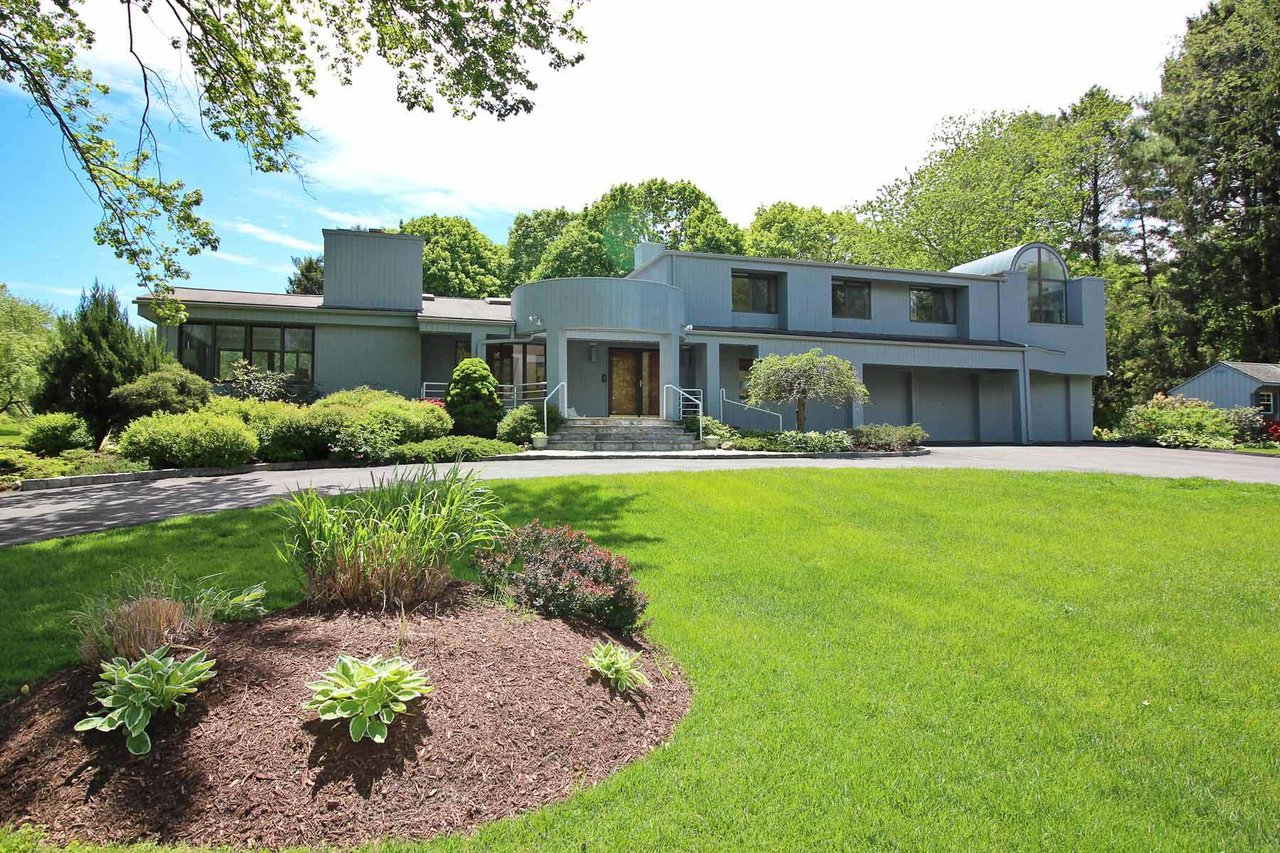
How Do I Know If a Luxury Home Is Overpriced?
Adam Cannon September 23, 2026
Adam Cannon September 23, 2026
When you're shopping for a luxury home, one of the hardest questions to answer is also one of the most important: Is this property actually worth what the seller is asking?
At the higher end of the market, determining value can become more complicated. Luxury homes tend to have fewer direct comparable sales, and differences in land, construction quality, renovations, architecture, privacy, and amenities can dramatically affect value.
A high price doesn't automatically mean a home is overpriced. The goal is to understand what supports that price.
Recent comparable sales are still one of the most useful places to start.
But with luxury real estate, finding truly comparable properties can be difficult.
A nearby home may have similar square footage and bedroom count but sit on a smaller lot, have older finishes, lack privacy, or be built to a completely different standard.
That's why the best comparison isn't necessarily the house closest geographically. It's the property that most closely resembles what you're actually considering.
Price per square foot can provide context, but it shouldn't determine what a luxury home is worth.
Imagine two 5,000-square-foot homes.
One has been extensively renovated with high-quality materials, sits on a private lot, and has updated mechanical systems. The other needs substantial improvements and sits in a less desirable location.
Their square footage may be identical, but their market values shouldn't necessarily be.
At the luxury level, what those square feet consist of becomes increasingly important.
Location matters at every price point, but micro-location can become especially important with luxury property.
Privacy, lot orientation, traffic, surrounding homes, views, proximity to amenities, neighborhood setting, and even where a property sits within a particular street can affect what buyers are willing to pay.
Two homes in the same Connecticut town can have significantly different values because their immediate surroundings offer very different experiences.
This is where buyers should be careful.
A seller may have spent hundreds of thousands of dollars renovating a home, but renovation cost and market value aren't automatically equal.
Quality matters. So does design.
A thoughtful renovation with excellent materials and broad buyer appeal may support a meaningful premium. A highly personalized project may have been extremely expensive without adding the same amount to resale value.
Ask what was actually improved, when the work was completed, and whether the renovations justify the difference between this property and competing homes.
The house itself isn't the only thing you're buying.
Lot size, usable acreage, landscaping, privacy, outdoor living areas, views, topography, and setting can represent a meaningful portion of a luxury property's value.
And more acreage isn't automatically better.
A smaller, beautifully positioned and highly usable lot may be more desirable than several acres that are steep, wet, difficult to maintain, or offer little additional privacy.
The quality of the land matters as much as the quantity.
A property's listing history can provide important clues.
How long has it been available? Has the seller reduced the price? Was it previously listed and withdrawn? Have similar homes sold during the same period?
Longer market time doesn't automatically prove a luxury home is overpriced. Higher-priced properties generally appeal to a smaller pool of potential buyers, and unique homes can take longer to match with the right buyer.
But if comparable properties are consistently selling while one home remains available, it's worth understanding why.
Luxury properties often contain features you won't find in typical homes.
Wine rooms, home theaters, pools, elaborate outdoor kitchens, extensive smart-home systems, sports courts, elevators, specialty garages, and custom architectural details may all contribute to the experience of the property.
But rarity alone doesn't establish value.
Ask whether the feature has broad appeal, whether it was executed well, and whether buyers in that particular market typically pay a premium for it.
Something can be incredibly expensive to build without adding the same amount to the home's resale value.
The asking price is a marketing decision. It isn't an independent determination of market value.
Some sellers price close to where they expect the property to sell. Others may intentionally test the market at a higher number.
As a buyer, you don't need to determine whether the seller's expectations are reasonable in the abstract.
You need to determine what you believe the property is worth based on recent sales, current competition, condition, location, quality, and the features that distinguish it.
This distinction matters.
A beautifully built home on an exceptional property may be substantially more expensive than surrounding homes and still be appropriately priced.
Likewise, a property can look spectacular online and still carry an asking price that isn't well supported by the market.
Luxury buyers should look beyond the number itself and ask why the home commands that number.
When the price is supported by location, quality, condition, land, scarcity, and relevant market evidence, expensive may simply reflect what the property is worth.
When those factors don't support the premium, that's when a closer look at pricing becomes especially important.
Adam Cannon, Realtor
Coldwell Banker Realty | West Hartford
Stay up to date on the latest real estate trends.
Whether buying, selling, or exploring your options, I am ready to help you achieve your goals. With experience, integrity, and commitment, I’m the partner you can count on for exceptional real estate results.