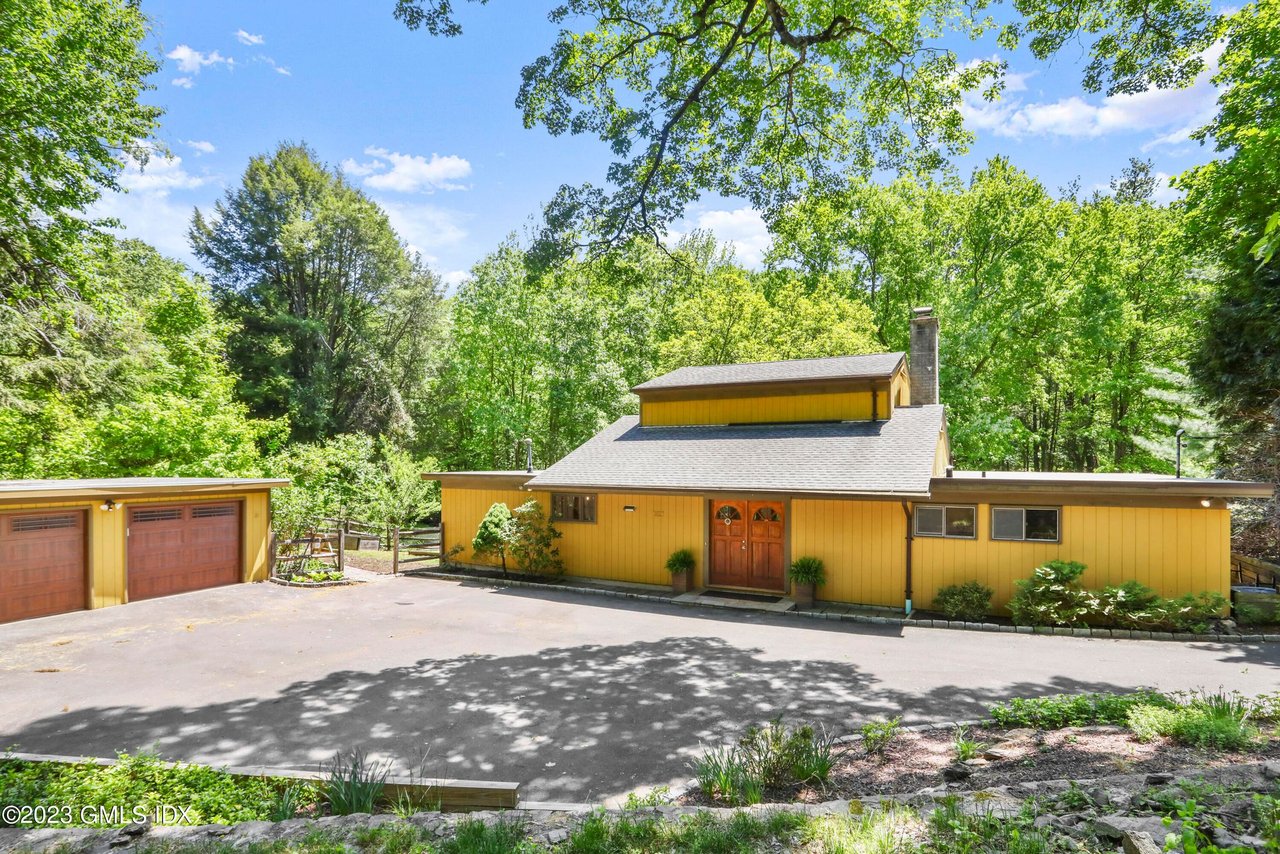
Can You Build an In Law Apartment in South Windsor?
Adam Cannon September 14, 2026
Adam Cannon September 14, 2026
You find a South Windsor home with a large basement, an oversized garage, or enough land that you immediately start thinking:
Could we put an in law apartment here?
Maybe.
South Windsor does allow accessory apartments in its single family residential zones, including both attached and detached units.
But if creating separate living space for a parent, adult child, caregiver, or another member of your household is an important part of your home search, don't buy a property based on what looks possible.
The town has specific requirements for accessory apartments, and the individual property still needs to support what you're planning.
South Windsor's zoning regulations allow accessory apartments in single family residential zones as a way to provide additional housing options.
An accessory apartment may be attached to the primary home or, under the town's regulations, detached from it.
That creates several possibilities depending on the property.
A homeowner might consider reconfiguring part of the existing house, creating an attached addition, or potentially establishing a detached accessory apartment elsewhere on the lot.
But each option comes with requirements.
South Windsor limits the size of an accessory apartment.
Under the town's regulations, the usable floor area can generally be no more than 30% of the usable floor area of the primary dwelling or 1,000 square feet, whichever is smaller.
The accessory apartment can also have no more than two bedrooms.
That means buyers shouldn't look at a large lot and automatically assume they can build a substantial second house on it.
An accessory apartment is intended to remain secondary to the primary residence.
If you're buying specifically because you need additional living space, think carefully about whether the permitted size would actually work for the person or people who would live there.
Yes.
South Windsor requires either the primary dwelling or the accessory apartment to be owner occupied.
The town's regulations also require owners of properties with approved accessory apartments to periodically reaffirm owner occupancy with the Planning Department.
That's an important detail if you're considering the property as an investment.
An accessory apartment may create flexibility for multigenerational living or another long term housing arrangement, but the regulations specifically restrict how the property can be used.
Properties with accessory apartments also cannot be used as short term rental properties.
South Windsor does allow detached accessory apartments, but this is where the characteristics of the lot become particularly important.
A detached accessory apartment requires submission of a site plan to the Planning and Zoning Commission.
The town's regulations also generally require the detached apartment to be located at least 30 feet from the property line.
So when you're looking at a South Windsor property and thinking, "There's plenty of room in the backyard," physical space isn't the only consideration.
You need to know where the property lines are.
You need to understand the required setbacks.
You need to consider the existing house and other structures.
And you need to determine whether the proposed location actually works under the regulations.
A basement may seem like the easiest place to create separate living space because the structure already exists.
But don't assume that an unfinished or partially finished basement can automatically become an accessory apartment.
Creating a legal dwelling space can involve zoning and building requirements beyond simply installing a kitchen and bathroom.
The layout, usable floor area, bedrooms, exits, building code requirements, electrical work, plumbing, heating, and other components can all matter depending on the project.
If you're touring a South Windsor home specifically because the basement appears perfect for an in law setup, investigate the feasibility before treating that future space as guaranteed.
The same principle applies.
An attached or detached garage may look like an obvious conversion opportunity, but its current existence doesn't automatically mean it can become living space.
A conversion can affect parking, setbacks, building requirements, utilities, and the overall configuration of the property.
If converting a garage is central to your plans, determine what approvals and modifications would be necessary before purchasing.
Sometimes the home with the largest garage isn't actually the easiest property to adapt.
Not every South Windsor property is necessarily served by the same utility setup.
If the property relies on a septic system, creating additional bedrooms or living space can introduce another layer of due diligence.
The existing system and property need to be evaluated based on the proposed use and applicable health requirements.
This is especially important because buyers sometimes focus on whether there's enough room to physically build an addition while overlooking whether the property's infrastructure can support it.
A large lot doesn't automatically answer that question.
Imagine you're comparing two South Windsor homes.
Home A is nicer inside, but the lot and layout make your future in law apartment difficult.
Home B needs some cosmetic updating, but the property may offer a much more practical path to creating the separate living arrangement your family actually needs.
If multigenerational living is one of your main reasons for moving, that information could completely change which property is the better purchase.
This is why future plans belong in the home search from the beginning.
Don't wait until after closing to ask whether the feature that made you buy the property is actually possible.
What if the home already has one?
Don't automatically assume an existing second kitchen, finished lower level, or separate entrance means the property contains an approved accessory apartment.
Find out how the space is legally documented.
Was an accessory apartment approved?
Were applicable permits obtained?
Does its current use comply with the town's requirements?
This can be particularly important when listing descriptions use phrases like "in law potential," "second living area," or "multigenerational setup."
Those phrases can describe how a space might function.
They don't necessarily tell you its legal status.
If you're creating an in law apartment for someone you care about, zoning isn't the only consideration.
Think about how the space would actually function.
Would they have a private entrance?
Is there enough natural light?
Would they have appropriate parking?
How close would their living area be to yours?
Are there stairs?
Would the layout still work if mobility needs change?
Could everyone have privacy while still being connected to the main household?
A technically possible project isn't necessarily a good design.
The best multigenerational homes create independence without making either household feel like they're living on top of the other.
This is another reason buyers are increasingly interested in these spaces.
You may need an in law apartment for a parent today.
Years from now, your household needs could be different.
An adult child may need somewhere to live.
You may want space for a caregiver.
Your own living arrangement may change.
A thoughtfully designed property can provide flexibility as a household evolves.
But because South Windsor requires owner occupancy and places restrictions on accessory apartments, buyers should understand the rules rather than assuming the space can eventually be used however they want.
If an accessory apartment is simply a "maybe someday" idea, you may be comfortable investigating it after you own the property.
If it's one of the primary reasons you're moving, treat it differently.
Before buying, determine:
Does the property appear to have enough usable space?
Would you want an attached or detached apartment?
Could the permitted size meet your needs?
How would parking work?
What utilities serve the property?
Would septic be a consideration?
Where are the property boundaries?
What approvals would the project require?
And most importantly, is the plan actually feasible?
Those questions can help you eliminate properties that won't work before you become emotionally attached to them.
For buyers specifically searching for a home that could accommodate multiple generations, South Windsor's accessory apartment regulations can create options.
But the right property matters.
A home that works beautifully for one household may be difficult to adapt for two living spaces.
That's why the search should go beyond bedrooms, bathrooms, and purchase price.
Look at the structure.
Look at the lot.
Understand the utilities.
Think about future access and privacy.
And investigate the town requirements before assuming a particular renovation can happen.
If you're buying a home in South Windsor and an in law apartment or multigenerational living arrangement is part of the plan, I can help you evaluate potential properties, recent sales, and the real estate side of that decision while you verify project requirements with the appropriate town departments.
Adam Cannon, Realtor
Coldwell Banker Realty | West Hartford
Stay up to date on the latest real estate trends.
Whether buying, selling, or exploring your options, I am ready to help you achieve your goals. With experience, integrity, and commitment, I’m the partner you can count on for exceptional real estate results.